

manual to auto gearbox conversion
Converting from a manual to an automatic gearbox is a complex process, potentially costing £15,000-£30,000, impacting vehicle enjoyment and value significantly;
Automatic transmissions are gaining popularity in the UK, challenging the long-held dominance of manual gearboxes, as evidenced by recent statistics.
Overview of the Conversion Process
The conversion fundamentally involves removing the existing manual transmission, flywheel, and clutch assembly. Subsequently, an automatic gearbox, torque converter, and associated components are installed.
Significant modifications are then required, encompassing wiring harness alterations for the transmission control unit (TCU) and sensor integration. Adjustments to the driveshaft, transmission mount, and potentially the brake system are crucial for proper functionality. Finally, fluid systems, including a transmission cooler, must be integrated for optimal performance and longevity.
Why Convert? Benefits and Drawbacks
Converting to an automatic offers enhanced driving comfort, particularly in congested traffic, and can broaden the vehicle’s appeal to a wider range of drivers. However, this comes at a substantial financial cost, potentially between £15,000 and £30,000.
Drawbacks include a potential decrease in driver engagement and, historically, slightly reduced fuel efficiency, though modern automatics mitigate this. The conversion can also impact resale value, depending on market preferences.
Assessing Your Vehicle’s Compatibility
Compatibility assessment is crucial; consider vehicle model specifics, engine/drivetrain alignment, and required parts before undertaking a manual to automatic gearbox conversion.
Vehicle Model Specific Considerations
Each vehicle model presents unique challenges during a manual to automatic conversion. For example, a 1977 Porsche 924 project car requires specific parts and careful planning. Nissan Patrol conversions also demand tailored approaches.
Factors like existing mounting points, wiring harness compatibility, and potential modifications to the driveshaft vary significantly. Thorough research into your specific vehicle is paramount. Ignoring these nuances can lead to costly errors and a non-functional transmission.
Engine and Drivetrain Compatibility
Ensuring compatibility between the engine and the new automatic drivetrain is crucial. The engine’s power output must align with the gearbox’s torque capacity. Modifications may be needed to the flywheel or flexplate for proper automatic transmission function.
Drivetrain components, including the driveshaft and differential, must also be assessed. Length adjustments or replacements might be necessary to accommodate the automatic gearbox’s different dimensions. Careful consideration prevents premature wear and failure.
Identifying Required Parts
A comprehensive parts list is essential for a successful conversion. This includes the automatic gearbox itself, a compatible torque converter, and a new flywheel or flexplate. Shifter mechanisms, transmission mounts, and potentially a modified driveshaft are also needed.
Don’t forget wiring harnesses, a transmission control unit (TCU), and sensors. Fluid lines and a transmission cooler may be required. Accurately identifying these parts prevents delays and ensures a smooth installation process.

Cost Breakdown of the Conversion
Conversion costs vary widely, ranging from £15,000 to £30,000, encompassing parts, labor, wiring, fluids, and potential vehicle modifications for a complete change.
Parts Costs: Gearbox, Flywheel, Clutch
Essential components significantly impact the conversion’s price; a suitable automatic gearbox is the primary expense, varying based on condition and source – used or new.
Additionally, a new flywheel and torque converter are required, adding to the overall cost. Removing the existing manual components, like the clutch and flywheel, is necessary, but doesn’t recoup significant funds.
Expect to spend a considerable amount on these core parts, potentially several thousand pounds, depending on the vehicle and gearbox type.
Labor Costs: Mechanic Fees and Time
Professional installation is highly recommended due to the complexity of this conversion, incurring substantial labor costs. Expect a mechanic to dedicate significant time – potentially several days – to complete the work.
Hourly rates vary regionally, but a skilled mechanic’s fees will contribute significantly to the overall expense. The process involves intricate mechanical work and electrical integration, demanding expertise.
Factor in potential unforeseen issues that may arise during the conversion, adding to both time and labor costs.
Additional Costs: Wiring, Fluids, and Modifications
Beyond the core components, several ancillary costs accompany a manual to automatic conversion. New transmission fluid is essential, alongside potential radiator and cooling system upgrades for optimal performance.
Extensive wiring modifications are often required to integrate the automatic gearbox’s control systems, adding to the complexity and expense. Expect costs for connectors, wiring harnesses, and potentially a TCU.
Minor modifications to the driveshaft or transmission mount may also be necessary, further increasing the overall project budget.
Sourcing the Necessary Components
Finding a suitable automatic gearbox, or a complete conversion kit, is crucial. Consider used versus new parts, balancing cost with reliability and warranty options.
Finding a Suitable Automatic Gearbox
Locating the correct automatic gearbox requires careful research, ensuring compatibility with your vehicle’s engine and drivetrain. Online marketplaces and specialist gearbox suppliers are excellent starting points. Prioritize gearboxes from similar vehicle models for easier integration.
Consider the gearbox’s condition and history; a detailed inspection is vital. Factor in potential rebuild costs if opting for a used unit. Thoroughly verify the gearbox’s specifications, including gear ratios and torque capacity, to match your vehicle’s performance needs.
Locating Conversion Kits
Conversion kits streamline the process, offering pre-selected components for a smoother transition. These kits typically include the gearbox, flywheel, clutch, and necessary mounting hardware. Online retailers specializing in vehicle modifications are primary sources.
Evaluate kit contents carefully, ensuring they cover all required parts for your specific vehicle model. Research the kit manufacturer’s reputation and customer reviews. While convenient, kits can be costly; compare prices and component quality before purchasing.
Used vs. New Parts: Weighing the Options
Choosing between used and new parts significantly impacts cost and reliability. Used gearboxes are cheaper but carry inherent risks regarding wear and potential future failures. Thorough inspection by a qualified mechanic is crucial before purchasing used components;
New parts offer peace of mind with warranties and guaranteed condition, but substantially increase the overall conversion expense. Consider the vehicle’s value and intended use when making this decision; balancing budget with long-term dependability is key.
The Conversion Process: Step-by-Step
The conversion involves removing the manual gearbox, installing the automatic, and completing extensive wiring and electronic modifications for seamless integration.
Careful execution of each step is vital for a successful and reliable automatic transmission swap.
Removing the Manual Gearbox
Disconnection begins with the driveshaft, followed by the shifter linkage and all associated wiring harnesses connected to the manual transmission.
Support the engine securely before removing the gearbox mounting bolts; careful handling prevents damage. Drain all fluids completely before attempting removal.
Lowering the gearbox requires patience and potentially a transmission jack, ensuring no cables or lines remain connected during the process.
Inspect the flywheel for wear and consider replacement alongside the clutch during this stage of the conversion.
Installing the Automatic Gearbox
Carefully align the automatic gearbox with the engine, ensuring proper engagement with the flywheel and torque converter.
Securely bolt the transmission into place, utilizing new mounting hardware to guarantee a firm and reliable connection.
Reconnect the driveshaft, verifying correct alignment and ensuring it spins freely without binding or vibration.
Double-check all connections, including cooler lines, before proceeding to the wiring and electronic modifications phase.
Wiring and Electronic Modifications
Modify the vehicle’s wiring harness to accommodate the automatic transmission’s sensors and solenoids, ensuring correct signal transmission.
Install a Transmission Control Unit (TCU) to manage gear shifts and optimize performance, calibrating it to the specific vehicle.
Integrate speed sensors, throttle position sensors, and other relevant components, verifying their functionality with diagnostic tools.
Thoroughly test all electrical connections to prevent errors and ensure smooth, reliable operation of the automatic transmission.
Modifications to the Vehicle
Vehicle modifications include shifter installation, console adjustments, driveshaft alignment, transmission mount changes, and potential brake system adaptations for optimal function.
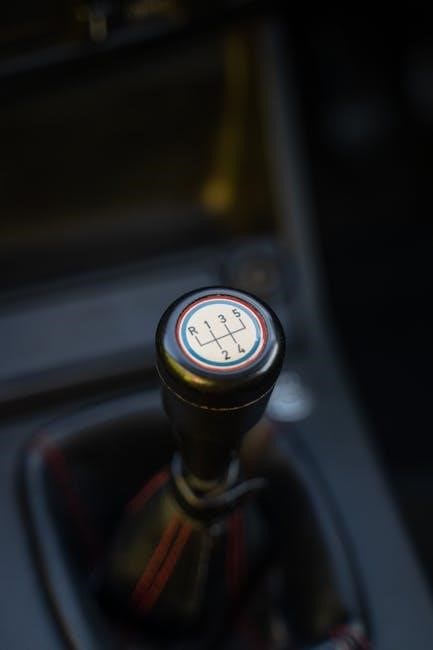
Shifter Installation and Console Changes
Shifter installation requires careful consideration, as the original manual shifter location won’t be suitable for an automatic. A new automatic shifter, along with associated cables or electronic linkages, must be precisely installed.
Consequently, the center console will almost certainly need modification or complete replacement to accommodate the new shifter’s size and shape. This often involves cutting, fabricating, or sourcing a console specifically designed for automatic transmissions in your vehicle model.
Proper fitment and a clean aesthetic are crucial for a successful conversion.
Driveshaft and Transmission Mount Adjustments
Automatic gearboxes often differ in length compared to manual transmissions, necessitating driveshaft adjustments. The driveshaft may require shortening or lengthening to ensure proper engagement with the differential and prevent vibrations.
Furthermore, the transmission mount itself will likely need replacement with one designed for the automatic gearbox’s dimensions and mounting points. Correct alignment is vital to avoid undue stress on the transmission and drivetrain components.
Precise measurements and potentially custom fabrication may be required.
Brake System Adjustments
Converting to an automatic gearbox sometimes requires brake system modifications, particularly if the original manual setup included a clutch pedal sharing hydraulic lines with the brakes.
A separate brake system circuit may be needed, demanding new lines, a master cylinder, and potentially a brake booster upgrade to maintain adequate stopping power.
Careful inspection and adjustment of the parking brake mechanism are also crucial, as the automatic transmission lacks engine braking for hill holding.
Electrical System Integration
Automatic gearbox conversions demand extensive wiring harness modifications and a Transmission Control Unit (TCU) installation for proper function and sensor calibration.
Wiring Harness Modifications
Converting to an automatic gearbox necessitates significant alterations to the vehicle’s existing wiring harness. The original manual transmission wiring will be incompatible, requiring careful splicing and integration of new circuits for the TCU and transmission sensors.
This involves connecting power, ground, speed sensors, and potentially shift solenoid control wires. Proper wiring is crucial for reliable operation and avoiding electrical faults; professional assistance is often recommended to ensure correct connections and prevent damage to the vehicle’s electrical system.
Transmission Control Unit (TCU) Installation
Installing a Transmission Control Unit (TCU) is central to a successful automatic gearbox conversion. The TCU manages gear shifts, monitors transmission parameters, and adapts to driving conditions. Secure mounting is vital, alongside proper power and ground connections.
Calibration is essential; the TCU must be programmed to match the specific gearbox and vehicle. This often requires specialized software and diagnostic tools. Incorrect TCU setup can lead to harsh shifting or transmission failure, highlighting the need for expert installation.
Sensor Integration and Calibration
Successful automatic transmission conversion demands precise sensor integration. Speed sensors, temperature sensors, and throttle position sensors relay crucial data to the TCU. Correct wiring and secure mounting are paramount for accurate readings.
Calibration is then vital; the TCU needs to interpret sensor data correctly. This often involves diagnostic tools and specialized software. Miscalibration can cause erratic shifting or damage the transmission, emphasizing the need for professional expertise during this stage.

Fluid Systems and Cooling
Automatic transmissions require specific fluid types and levels for optimal operation. Transmission cooler installation is often necessary, alongside checks of the existing radiator system.
Transmission Fluid Type and Level
Selecting the correct transmission fluid is paramount for a successful conversion; using the wrong type can cause severe damage. Automatic gearboxes are sensitive, demanding fluids specifically engineered for their internal components and friction materials.
Checking the fluid level is crucial post-installation and during routine maintenance. Most automatic transmissions have a dipstick for easy level assessment, typically requiring the engine to be running and warm. Maintaining the correct fluid level ensures smooth shifting and prevents overheating, extending the gearbox’s lifespan.
Transmission Cooler Installation
Installing a transmission cooler is often essential during a manual to automatic conversion, especially for vehicles intended for towing or heavy use. Automatic transmissions generate significant heat, and the stock radiator may not provide sufficient cooling capacity.
A dedicated cooler, typically mounted in front of the radiator, dissipates heat more effectively, preventing fluid breakdown and ensuring reliable operation. Proper installation involves secure mounting and correctly sized hoses to maintain optimal fluid flow and prevent leaks.
Radiator and Cooling System Checks
Before and after the conversion, thoroughly inspect the radiator and entire cooling system. Ensure the radiator isn’t clogged or damaged, as it plays a crucial role in overall engine and transmission temperature regulation. Check hoses for cracks, leaks, and proper connections.
Verify the cooling fan operates correctly and the coolant level is appropriate; A compromised cooling system can quickly lead to overheating, especially with the added heat load of an automatic transmission.
Testing and Troubleshooting
Post-conversion, initial diagnostics and road tests are vital to evaluate performance. Address common issues like slipping gears or unusual noises promptly for optimal results.
Initial Start-Up and Diagnostics
Following the installation, a careful initial start-up is crucial. Check for any immediate leaks around the gearbox, cooler lines, and fluid connections. Utilize diagnostic tools to scan for transmission-related error codes, even if no warning lights are illuminated.
Monitor transmission fluid levels closely, ensuring they are within the manufacturer’s specified range. Pay attention to the shift quality during the first few short drives, noting any harshness or delays. A thorough diagnostic assessment will reveal potential issues early on, preventing further complications.
Road Testing and Performance Evaluation
After initial diagnostics, extensive road testing is vital. Evaluate shift points under various driving conditions – city, highway, and acceleration. Assess the smoothness of gear changes, listening for unusual noises. Monitor the transmission temperature gauge to ensure it remains within acceptable limits during prolonged use.
Compare the vehicle’s performance to factory specifications for similar automatic models. Note any discrepancies in acceleration, fuel economy, or overall drivability. This evaluation identifies areas needing refinement or potential troubleshooting.
Common Issues and Solutions
Post-conversion, potential issues include incorrect TCU calibration leading to harsh shifting, or sensor malfunctions triggering warning lights. Wiring errors can cause intermittent transmission operation. Fluid leaks may occur from improperly sealed connections.
Solutions involve re-flashing the TCU with updated software, thoroughly checking wiring for continuity and correct connections, and meticulously inspecting all fluid lines and fittings. Addressing these promptly ensures optimal performance and prevents further damage.

Legal and Insurance Implications
Post-conversion, vehicle registration and inspection are crucial, alongside informing your insurer about the modification for continued, valid coverage and legal compliance.
Vehicle Registration and Inspection
Following a manual to automatic gearbox conversion, it’s vital to understand the legal requirements for vehicle registration updates. Many jurisdictions necessitate informing the relevant vehicle authorities – like the DVLA in the UK – about substantial modifications.
A subsequent inspection is often mandatory to verify the conversion meets safety standards and complies with roadworthiness regulations. This inspection assesses the correct installation of components, ensuring the vehicle’s structural integrity hasn’t been compromised, and confirming all systems function as intended. Failure to comply can lead to legal penalties.
Insurance Coverage After Conversion
Post-conversion, immediately notify your insurance provider about the manual to automatic gearbox change. Failing to do so could invalidate your policy, leaving you uninsured in the event of an accident. Insurers view modifications as altering risk profiles, potentially impacting premiums.
Be prepared for a possible premium increase, reflecting the altered vehicle characteristics. Some insurers may require a vehicle inspection to assess the quality of the conversion before offering coverage. Accurate disclosure is crucial for valid insurance.
Compliance with Local Regulations
Gearbox conversions must adhere to local vehicle regulations, often requiring inspection and certification. Modifications impacting vehicle safety or emissions necessitate documentation proving compliance with standards. Check with your local vehicle registration authority for specific requirements before, during, and after the conversion.
Failure to comply can lead to registration refusal or legal penalties. Ensure the conversion doesn’t violate emissions standards or safety protocols. Proper documentation is vital for legal operation of the modified vehicle.
Specific Vehicle Examples
Nissan Patrol conversions are noted, while a 1977 Porsche 924 project car’s manual transmission is being considered for change, impacting its restoration.
Nissan Patrol Auto to Manual Conversion Costs
Estimating the cost for a Nissan Patrol’s automatic to manual conversion proves challenging, varying significantly based on parts sourcing and labor rates. Online discussions suggest potential expenses ranging from £15,000 to £30,000 for a fully fitted conversion.
This figure encompasses the gearbox itself, a compatible flywheel, a new clutch assembly, and the necessary modifications to the transmission tunnel and associated linkages. Labor costs, dependent on mechanic expertise and time invested, contribute substantially to the overall expense.
Porsche 924 Manual to Auto Conversion
Undertaking a manual to automatic conversion on a Porsche 924, like a recently purchased 1977 project car, presents unique challenges. The process requires sourcing a compatible automatic gearbox and associated components, potentially increasing project costs and complexity.
Beyond the gearbox itself, modifications to the wiring harness, shifter mechanism, and potentially the driveshaft are essential. The overall cost will depend heavily on whether new or used parts are utilized, and the extent of required fabrication.
Electric Vehicle Conversion Considerations
Integrating automatic gearboxes into EV conversions, like a 1958 Porsche 356A, offers simplified driving; however, careful planning is crucial for compatibility and efficiency.
Integrating Automatic Gearboxes into EV Conversions
Electric vehicle conversions present unique opportunities when considering automatic transmissions. Unlike internal combustion engines, EVs deliver instant torque, potentially reducing the need for multiple gears.
However, utilizing an automatic gearbox can simplify the driving experience and offer smoother acceleration. The Porsche 356A example demonstrates a successful integration, boosting power to 120 horsepower. Careful consideration must be given to the transmission controller and ensuring compatibility with the electric motor’s power delivery.
Porsche 356A Electric Conversion Example
UK-based Electric Classic Cars showcased a remarkable transformation with a 1958 Porsche 356A. This classic coupe received a full electric conversion, replacing its original powertrain with a 120-horsepower electric motor.
While details regarding the transmission type weren’t explicitly stated, the conversion highlights the feasibility of integrating modern technology into vintage vehicles. This project demonstrates how electric power can revitalize classic cars, offering increased performance and a sustainable driving experience.

Future Trends in Transmission Technology
Automatic transmissions are rising in the UK, with advanced systems emerging. This shift impacts manual-to-auto conversions, potentially increasing demand for automated driving experiences.
New technologies will likely streamline conversion processes and enhance performance.
The Rise of Automatic Transmissions in the UK
Recent data from cap hpi reveals a significant trend: automatic gearboxes are steadily gaining ground in the UK automotive market, challenging the traditional dominance of manual transmissions.
Last year alone, automatic vehicles saw increased sales, indicating a changing preference among UK drivers. This shift influences the demand for conversions, as more owners seek the convenience of automatics. The increasing popularity suggests a broader acceptance of automatic technology, potentially impacting future vehicle values and conversion costs.
Advanced Automatic Transmission Systems
Modern automatic transmissions are far removed from older designs, incorporating sophisticated technology like continuously variable transmissions (CVTs) and dual-clutch systems.
These advancements offer smoother shifts, improved fuel efficiency, and enhanced performance, making conversions increasingly appealing. Integrating these systems requires specialized knowledge and potentially a new Transmission Control Unit (TCU). The complexity of these systems impacts conversion costs, but delivers a superior driving experience.