

ganesha ashtottara shatanamavali in telugu pdf
Ganesha Ashtottara Shatanamavali in Telugu: A Comprehensive Plan
This plan details accessing the Ganesha Ashtottara Shatanamavali in Telugu, including readily available PDF downloads. Resources like Stotra Nidhi and mobile apps facilitate learning and recitation.
Authentic Telugu translations of the 108 names are crucial, alongside understanding the script and pronunciation. Digital preservation efforts ensure continued access to these sacred texts.
The Namavali’s significance, historical context, and benefits of reciting it will be explored, offering a comprehensive guide for devotees seeking Ganesha’s blessings.
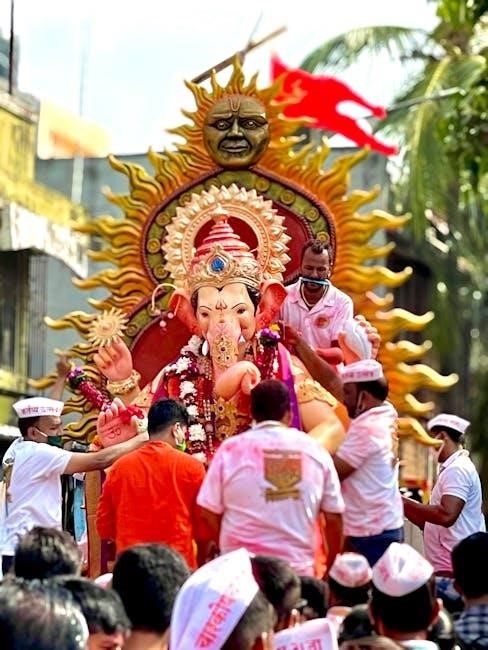
The Ashtottara Shatanamavali, a sacred practice within Hinduism, represents a devotional offering comprising 108 names of a deity. Specifically, the Ganesha Ashtottara Shatanamavali focuses on Lord Ganesha, the revered remover of obstacles and harbinger of prosperity. This practice isn’t merely a recitation; it’s a profound spiritual exercise designed to connect devotees with the divine energy of Ganesha.
In the context of Telugu-speaking devotees, accessing this powerful hymn in their native language is paramount. Fortunately, numerous resources provide the Ganesha Ashtottara Shatanamavali in Telugu, often available as easily downloadable PDF files. These PDFs typically contain the names in Telugu script, alongside transliterations and sometimes, translations to aid understanding.
The availability of these resources, including mobile applications like Stotra Nidhi, democratizes access to this ancient practice. Whether seeking to deepen their devotion, overcome challenges, or simply invoke Ganesha’s blessings, individuals can readily engage with the Namavali in a format that resonates with their linguistic and cultural background. The practice fosters a deeper connection with the deity through focused repetition and contemplation of each name.
The Significance of 108 Names
The number 108 holds profound spiritual significance in Hinduism, deeply interwoven with cosmology and yogic practices. Within the Ganesha Ashtottara Shatanamavali, the recitation of 108 names isn’t arbitrary; it’s a deliberate act rooted in ancient wisdom. Each name represents a different facet of Lord Ganesha’s divine attributes, powers, and forms, offering a comprehensive understanding of the deity.
Accessing the Ganesha Ashtottara Shatanamavali in Telugu PDF format allows devotees to engage with this sacred number in their own language. The repetition of these 108 names is believed to create a powerful vibrational energy, amplifying the devotee’s connection with Ganesha. This practice is thought to purify the mind, enhance concentration, and invoke blessings for success and well-being.
Furthermore, 108 is considered a sacred number in astrology and numerology, representing wholeness and completion. Reciting the Namavali, particularly using readily available Telugu PDFs and mobile apps, provides a structured pathway to spiritual growth and a deeper appreciation for the multifaceted nature of Lord Ganesha.

Lord Ganesha: The Remover of Obstacles
Lord Ganesha, widely revered as the remover of obstacles and the god of new beginnings, holds a paramount position in the Hindu pantheon. Before embarking on any venture, devotees invoke his blessings to ensure success and overcome challenges. The Ganesha Ashtottara Shatanamavali, particularly in Telugu PDF format, serves as a potent tool for connecting with this benevolent deity.
Each of the 108 names within the Namavali highlights a specific aspect of Ganesha’s power to dismantle obstacles – be they internal, external, or karmic. Reciting these names, readily accessible through digital resources like Stotra Nidhi and mobile applications, is believed to clear pathways and facilitate smooth progress in all endeavors.
The availability of the Ganesha Ashtottara Shatanamavali in Telugu allows devotees to deeply connect with Ganesha’s protective energy in their native language. This practice isn’t merely a ritual; it’s a heartfelt offering that invites divine intervention and fosters a sense of unwavering faith, ensuring obstacles are transformed into opportunities.

Historical Context of the Namavali
The origins of the Ganesha Ashtottara Shatanamavali trace back to ancient Vedic traditions, evolving over centuries through various scriptures and oral transmissions. While a definitive single origin point remains elusive, the practice of reciting 108 names of deities gained prominence in the Puranic era. The Telugu PDF versions we access today represent a culmination of this historical development, adapted for linguistic and cultural relevance.
Early iterations likely existed in Sanskrit, with translations and adaptations into regional languages, including Telugu, occurring over time. The availability of these texts in PDF format signifies a modern chapter in this history, democratizing access to this sacred practice. Stotra Nidhi and similar platforms play a vital role in preserving and disseminating these ancient hymns.
Understanding this historical context enriches the recitation experience, connecting devotees to a lineage of faith spanning generations. The Telugu adaptation ensures the continued vibrancy of this tradition, making Ganesha’s blessings accessible to a wider audience.
Understanding the Telugu Script and Pronunciation
Accurate recitation of the Ganesha Ashtottara Shatanamavali in Telugu necessitates familiarity with the script and its phonetic nuances. The Telugu PDF resources available often present the names in the native script, requiring readers to understand the characters and their corresponding sounds. Telugu is a syllabic script, meaning each consonant inherently carries a vowel sound.
Pronunciation is key to unlocking the spiritual benefits of the Namavali. Certain sounds unique to Telugu may not have direct equivalents in other languages, demanding careful attention. Online resources and audio recordings accompanying some PDF versions can aid in correct pronunciation. Mastering the vowel combinations and consonant clusters is crucial.
Resources like Stotra Nidhi often provide transliterations alongside the Telugu script, assisting those unfamiliar with the language. A foundational understanding of Telugu phonetics will significantly enhance the devotional experience and ensure respectful recitation of Ganesha’s sacred names.
Source Texts and Variations
The Ganesha Ashtottara Shatanamavali originates from ancient Sanskrit texts, with various regional adaptations, including the Telugu version. Examining the source texts reveals subtle variations in the order and phrasing of the 108 names. Many Telugu PDF documents are derived from translations and interpretations of these original Sanskrit sources.
Different lineages and traditions may employ slightly differing versions of the Namavali. Some PDFs might include additional verses or mantras alongside the core 108 names. Understanding these variations is crucial for appreciating the richness and diversity of Ganesha worship.
Scholarly research indicates that the Ashtottara Shatanamavali has evolved over centuries, with regional scribes and commentators adding their own insights. Comparing multiple Telugu translations available as PDFs can illuminate these nuances and provide a more comprehensive understanding of the hymn’s historical development.
Availability of Telugu PDFs
Numerous Telugu PDF versions of the Ganesha Ashtottara Shatanamavali are readily accessible online. Websites like Stotra Nidhi offer downloadable PDFs, alongside options for viewing the text directly on their platform. Several other online repositories and devotional websites also host these sacred texts in Telugu script.
A quick internet search for “Ganesha Ashtottara Shatanamavali Telugu PDF” yields a substantial number of results, catering to various user preferences. These PDFs range in formatting, from simple text documents to beautifully designed versions with illustrations and transliterations.
Mobile applications, such as the Stotra Nidhi app available on both the Play Store and App Store, often include the Telugu Namavali as a downloadable resource. These apps provide convenient access for recitation and study. However, verifying the authenticity of the source is always recommended when downloading PDFs.
Stotra Nidhi and Mobile Applications
Stotra Nidhi stands as a prominent digital resource for accessing the Ganesha Ashtottara Shatanamavali in Telugu, offering both website access and a dedicated mobile application. The platform provides the Namavali text in Telugu script, facilitating easy reading and recitation for devotees.
The Stotra Nidhi mobile app, available on both Android (Play Store) and iOS (App Store), allows users to download the Telugu version for offline access; This is particularly useful for those who wish to recite the Namavali during travel or in areas with limited internet connectivity.
Beyond Stotra Nidhi, other devotional apps may also feature the Ganesha Ashtottara Shatanamavali in Telugu. These applications often include audio recitations, allowing users to learn the correct pronunciation and enhance their devotional experience. Utilizing these apps provides a convenient and accessible way to engage with this sacred hymn.
The First 10 Names (Namavali Segment 1)
The initial ten names of the Ganesha Ashtottara Shatanamavali, as found in Telugu PDF resources, establish the foundational reverence for Lord Ganesha. These names, often recited as a starting point for the full 108, invoke Ganesha’s various attributes and divine forms.
The segment begins with “ఓ గజాననాయ నమ” (O Gajananaya Namah), praising Ganesha with the elephant face. Following this is “ఓ గణాధ్యక్షాయ నమ” (O Ganadhyakshaya Namah), recognizing Him as the chief of the Ganas. “ఓ విఘ్నారాజాయ నమ” (O Vighnarajaya Namah) acknowledges Ganesha as the Lord of Obstacles, and “ఓ వినాయకాయ నమ” (O Vinayakaya Namah) honors Him as the one who removes obstacles.
Further names include “ఓ ద్త్వెమాతరాయ నమ”, “ఓ ద్విమఖాయ నమ”, “ఓ ప్రమఖాయ నమ”, “ఓ సమఖాయ నమ”, “ఓ కతినే నమ”, and “ఓ సప్రదీపాయ నమ”. These initial ten names, readily available in Telugu PDFs, lay the groundwork for a deeper exploration of Ganesha’s divine qualities.
Names 11-20 (Namavali Segment 2)

Continuing from the initial ten, the next segment of the Ganesha Ashtottara Shatanamavali in Telugu, accessible through various PDF resources, unveils further facets of Lord Ganesha’s divine persona. These names build upon the foundational reverence established in the first segment.
This portion commences with “ఓ సఖనిధయే నమ” (O Sakhanidhayē Namah), praising Ganesha as a treasure of friendship. “ఓ సరాధ్యక్షాయ నమ” (O Saradhyakshaya Namah) recognizes Him as the leader of all beings. “ఓ సరారిఘ్నాయ నమ” (O Sararighnaya Namah) acknowledges Ganesha’s power to destroy evil.
Subsequent names within this segment, easily found in downloadable Telugu PDFs, continue to elaborate on Ganesha’s attributes. These names, recited with devotion, deepen the connection with the deity. The precise sequence and transliteration can be found within the Stotra Nidhi and other digital resources, offering a complete and accurate representation of this sacred hymn.
Names 21-30 (Namavali Segment 3)
Delving deeper into the Ganesha Ashtottara Shatanamavali in Telugu, segment three, readily available in PDF format, reveals a further unfolding of Lord Ganesha’s divine qualities. This section builds upon the previous twenty names, intensifying the devotional experience.
The names within this segment, often accessed through mobile applications like Stotra Nidhi, highlight Ganesha’s multifaceted nature. They emphasize His role as a protector, a bestower of wisdom, and a remover of obstacles. Each name serves as a mantra, resonating with specific energies and blessings.
These Telugu verses, easily downloadable as PDFs, are meticulously preserved in various digital archives. Recitation of these names, with proper pronunciation guided by online resources, fosters a deeper connection with the deity. The sequence and accurate transliteration are vital for effective worship, ensuring the full benefits of this sacred hymn are realized.
Names 31-40 (Namavali Segment 4)
Continuing our exploration of the Ganesha Ashtottara Shatanamavali in Telugu, segment four, conveniently found in PDF versions online, unveils yet another layer of Lord Ganesha’s glorious attributes. This portion of the 108 names builds upon the preceding segments, deepening the devotee’s spiritual connection.
These names, frequently accessible via the Stotra Nidhi mobile app, emphasize Ganesha’s power to grant success, prosperity, and inner peace. Each name acts as a potent mantra, vibrating with divine energy and offering specific boons to those who recite them with devotion.
PDF downloads of the Telugu lyrics ensure accurate pronunciation and understanding. Resources dedicated to the Namavali often provide transliterations and meanings, aiding in a more meaningful practice. Consistent recitation, guided by authentic sources, unlocks the full potential of these sacred names, fostering a profound relationship with the remover of obstacles.

Meaning and Symbolism of Key Names
Delving into the Ganesha Ashtottara Shatanamavali in Telugu, readily available as a PDF download, reveals profound symbolism embedded within each of the 108 names. Understanding these meanings elevates recitation beyond mere repetition, transforming it into a deeply meditative practice.
Names like “Vighnaraja” (Lord of Obstacles) highlight Ganesha’s role in removing impediments, while “Ekadantaya” (One-Tusked) symbolizes his unwavering focus and power to overcome duality. The Telugu translations, often found within comprehensive PDF guides, unlock these nuanced interpretations.
Resources like Stotra Nidhi further illuminate the symbolism, connecting each name to specific aspects of Ganesha’s iconography and mythology. Exploring these layers enhances devotion and provides a deeper appreciation for the deity’s multifaceted nature. The Namavali isn’t simply a list; it’s a key to unlocking Ganesha’s divine wisdom and grace.
Benefits of Reciting the Namavali
Consistent recitation of the Ganesha Ashtottara Shatanamavali in Telugu, easily accessible through PDF downloads and mobile applications like Stotra Nidhi, yields numerous spiritual and worldly benefits. Devotees report increased mental clarity, reduced stress, and enhanced focus.
The Namavali is believed to remove obstacles, paving the way for success in endeavors and fostering overall prosperity. Regular chanting cultivates a deeper connection with Lord Ganesha, inviting his blessings and guidance into one’s life. Telugu translations within the PDF versions aid comprehension and enhance the devotional experience.
Furthermore, reciting the 108 names is said to purify negative energies, promote inner peace, and strengthen one’s spiritual resolve. It’s a powerful practice for overcoming challenges and achieving personal growth, offering solace and strength to those who seek Ganesha’s divine intervention.
Correct Method of Recitation (Puja Vidhi)
The proper method for reciting the Ganesha Ashtottara Shatanamavali in Telugu, often found in accessible PDF formats, involves a respectful and focused approach. Begin by purifying the space and oneself through a cleansing ritual. Offer incense and flowers to Lord Ganesha’s image or yantra.

Ideally, recite the Namavali facing east or north, seated comfortably. Utilize a Telugu PDF to ensure accurate pronunciation of each name. Each name should be recited with devotion and clarity, followed by “Namah” (नमः). Repetition of the entire Namavali 108 times is considered highly auspicious.
Maintain a meditative state throughout the recitation, focusing on the meaning and energy of each name. Conclude with an offering of prasad and express gratitude to Lord Ganesha for his blessings. Mobile apps like Stotra Nidhi can assist with proper chanting and timing.
Importance of Bhakti (Devotion)
Bhakti, or unwavering devotion, is paramount when reciting the Ganesha Ashtottara Shatanamavali in Telugu, whether utilizing a physical text or a PDF version. The mere mechanical recitation of the 108 names holds limited spiritual value without heartfelt connection.
True devotion transcends linguistic accuracy; it’s about surrendering to Lord Ganesha’s energy and embodying the qualities he represents – wisdom, compassion, and the removal of obstacles. Accessing resources like Stotra Nidhi or downloadable Telugu PDFs simply provides the tool; the power lies within the devotee’s sincerity.
Cultivate a loving and reverent attitude during recitation. Visualize Ganesha’s benevolent presence and allow his energy to permeate your being. This genuine bhakti amplifies the benefits of the Namavali, fostering inner peace, clarity, and a deeper connection to the divine.
Common Misconceptions About the Namavali
Several misconceptions surround the Ganesha Ashtottara Shatanamavali, even when accessed through Telugu PDF resources or apps like Stotra Nidhi. A prevalent belief is that perfect pronunciation is essential, overshadowing the intent of devotion. While accurate articulation is helpful, sincere bhakti is far more crucial.
Another misunderstanding is that simply downloading a PDF or reciting the names guarantees immediate results. The Namavali is a spiritual practice requiring consistent effort and a receptive heart. It’s not a magical formula.

Some believe specific rituals are mandatory for effective recitation. While puja vidhi (correct method of recitation) exists, the core lies in heartfelt offering. Finally, equating the Telugu version as ‘less potent’ than the Sanskrit original is incorrect; the power resides in devotion, not the language itself.
Finding Authentic Telugu Translations
Locating authentic Telugu translations of the Ganesha Ashtottara Shatanamavali requires careful discernment, especially when utilizing PDF downloads; Stotra Nidhi offers a reliable source, but cross-referencing is advisable. Beware of translations lacking scholarly backing or exhibiting inconsistencies.
Prioritize resources from established Hindu organizations or respected spiritual teachers. Many online PDFs may contain transcription errors or interpretative biases. Look for versions that provide not just transliteration, but also contextual meaning of each name.
Comparing multiple translations can reveal nuances and ensure accuracy. Consider versions that include the original Sanskrit alongside the Telugu script. Mobile applications, while convenient, should also be vetted for authenticity. Ultimately, a translation resonating with your understanding and devotion is key.
Comparison with Sanskrit Versions
Analyzing Telugu translations of the Ganesha Ashtottara Shatanamavali alongside the original Sanskrit reveals fascinating linguistic and cultural adaptations. While the core meaning of each name remains consistent, the Telugu rendering often incorporates regional nuances and poetic expressions.
PDF versions of both Sanskrit and Telugu texts facilitate side-by-side comparison, highlighting subtle differences in interpretation. Examining the root Sanskrit etymology clarifies the essence of each name, enriching understanding; Some Telugu translations may expand upon Sanskrit descriptions, adding local folklore or symbolism.
Discrepancies, if any, usually stem from variations in transliteration or interpretative choices. It’s crucial to consult reputable sources and scholarly commentaries. Understanding the Sanskrit foundation enhances appreciation for the Telugu adaptation, fostering a deeper connection with Lord Ganesha’s divine attributes.
Resources for Learning the Namavali
Numerous resources aid in learning the Ganesha Ashtottara Shatanamavali in Telugu. The Stotra Nidhi mobile application, available on both the Play Store and App Store, provides convenient access to the Namavali, often including audio recitations.
Several websites offer downloadable PDF versions of the Telugu lyrics, enabling offline study and practice. Online forums and communities dedicated to Hindu devotional practices can provide guidance and clarification on pronunciation and meaning.

Telugu eBooks and digital libraries frequently host the Ashtottara Shatanamavali, alongside scholarly commentaries. Learning resources also include dedicated YouTube channels featuring guided recitations and explanations. Consistent practice, coupled with these resources, fosters fluency and devotion, allowing devotees to fully embrace the power of Ganesha’s 108 names.

Future of Digital Preservation (PDFs & eBooks)
The future of the Ganesha Ashtottara Shatanamavali in Telugu relies heavily on continued digital preservation. Maintaining accessible PDF and eBook formats is crucial for future generations of devotees. Initiatives to archive existing digital copies and create new, high-quality scans of traditional texts are vital.
Collaborative projects involving digital libraries, religious organizations, and technology experts can ensure long-term accessibility. Developing interactive eBooks with audio pronunciations and translations will enhance the learning experience.
Open-source platforms and cloud storage solutions offer cost-effective methods for preserving these sacred texts. Regularly updating digital formats to remain compatible with evolving technology is essential. Furthermore, promoting awareness about the importance of digital preservation will encourage community involvement and support for these endeavors, safeguarding this spiritual heritage.
Embracing Ganesha’s Blessings
The Ganesha Ashtottara Shatanamavali in Telugu, readily available as PDF downloads and through mobile applications like Stotra Nidhi, offers a powerful pathway to connect with Lord Ganesha. Reciting these 108 names isn’t merely a ritual; it’s an immersive experience fostering devotion and removing obstacles.
By embracing this practice, devotees can cultivate inner peace, prosperity, and wisdom. The accessibility of digital resources ensures that this ancient tradition remains vibrant and relevant in the modern world. Understanding the script, pronunciation, and symbolism deepens the spiritual connection.
Ultimately, the Namavali serves as a constant reminder of Ganesha’s benevolent presence, inviting blessings into our lives. Continued preservation and dissemination of these Telugu texts will empower future generations to experience the transformative power of Ganesha’s grace.